

Glycolic Acid Toner: A Closer Look at This Quiet Powerhouse in Topical Skincare
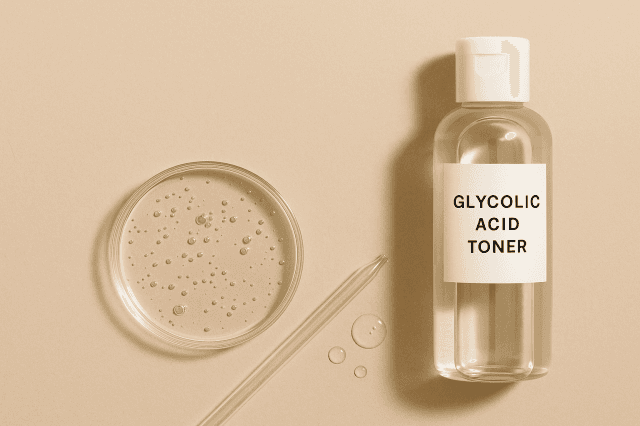
Glycolic acid toners have quietly earned their place in advanced skincare routines—not through hype, but through performance. While many actives rise and fall on the back of trends, glycolic acid has remained steady, not because it's a miracle, but because it works predictably when used properly. In a market crowded with complex, multi-step routines and experimental ingredients, the glycolic acid toner remains a minimalist's secret weapon—and a formulator's favorite.
This post explores how glycolic acid toner functions beyond its surface-level benefits, where it fits among topical skincare products, and why it continues to hold relevance in both clinical and consumer-grade formulations.
Beyond Surface-Level: How Glycolic Acid Toners Actually Interact with Skin
While it's often marketed as a chemical exfoliant, glycolic acid behaves more like a facilitator than a brute force. It doesn't just “slough off” dead cells—it disrupts the cohesion of the stratum corneum in a way that allows for controlled renewal. This is key, because skin doesn't respond well to trauma or aggression. Glycolic acid, at appropriate concentrations and pH levels, nudges the skin to behave more efficiently, rather than forcing rapid turnover that can lead to barrier impairment.
A well-formulated glycolic acid toner typically sits in the 3.5 to 4.0 pH range, creating an acidic environment that's tolerable for most skin types, while still biologically active. It's not about the percentage alone—delivery system, pH, and supporting ingredients (like humectants and anti-inflammatories) matter just as much.
Why Toner? Why Not Serum or Cream?
Toners have been wrongly reduced to an aesthetic step—something watery and fragrant to “prep” the skin. But when it comes to glycolic acid, the toner format offers strategic advantages.
-
Low Viscosity = Fast Absorption: Glycolic acid in a water-based solution can penetrate faster and more evenly than in thicker formulations.
-
Layering-Friendly: A toner doesn't compete with heavier actives. It's a base layer—one that sets the tone (literally) for what follows.
-
Versatility of Use: You can sweep it across the skin for broad application or press it into specific zones that need refinement, like around the nose or chin.
In essence, a glycolic acid toner isn't just a liquid—it's a delivery system. One that's often more efficient than serums when used strategically.
Positioning Glycolic Acid Toners Within Topical Skincare Products
Topical skincare products come in many forms: emollients, occlusives, hydrators, exfoliants, actives, and hybrids of all these. Glycolic acid toners belong to the exfoliant category, but they play well with others—especially when paired intelligently.
Compatible Pairings:
-
With Niacinamide: A good follow-up for barrier support, especially if you're using glycolic acid at night.
-
With Ceramides or Fatty Acids: To offset any mild irritation, a moisturizer with barrier-repair lipids can seal the deal.
-
With Peptides: Post-exfoliation is prime time for peptides, as your skin is more receptive to their signaling.
Products to Avoid Immediately After:
-
Other Acids (Especially BHAs or L-Ascorbic Acid): Unless you're following a dermatologist-supervised routine, doubling up can increase risk of barrier disruption.
-
Retinoids (for some): Not always a hard no, but combining retinoids and glycolic acid on the same night can overwhelm certain skin types.
Who Should Actually Use a Glycolic Acid Toner?
Despite its universal reputation, glycolic acid isn't for everyone, at least not in the same concentration or frequency.
Best Suited For:
-
Thicker or Congested Skin: Those who deal with dullness, uneven tone, or persistent textural roughness.
-
Mature Skin: It can help re-stimulate cellular behavior that has slowed with age, aiding in smoother appearance over time.
-
Oily or Combination Skin: Especially in humid climates, glycolic acid toner can cut through buildup without weight.
Caution For:
-
Reactive or Rosacea-Prone Skin: Glycolic acid can trigger flares or increase sensitivity.
-
Over-Exfoliators: If you're already using physical scrubs, enzymes, or other AHAs/BHAs, adding a toner might be overkill.
The key lies in listening to your skin and adjusting frequency—this isn't a daily-use product for everyone.
The Long Game: How to Use Glycolic Acid Toner Without Burning Out Your Barrier
One of the most common mistakes with glycolic acid toner is using it too often, too quickly. While early results can be gratifying—glowier skin, smoother texture—it's a slow-burn kind of ingredient. Real structural improvements come with consistent, moderate use.
A Gentle Protocol:
-
Start 2x a week, preferably at night.
-
Always follow with a hydrating serum and barrier-supporting moisturizer.
-
Use SPF diligently during the day—even if you apply glycolic acid at night. Skin is more photo-sensitive post-exfoliation.
This slow approach helps maintain the integrity of the skin's lipid barrier, while still making space for cellular turnover and textural improvement.
Final Thoughts: The Beauty of Restraint in a Bottle
In an industry chasing the next big molecule, the glycolic acid toner remains one of the most elegant formulations in topical skincare. It doesn't overpromise. It doesn't rely on flashy branding. Instead, it delivers something more meaningful: consistent, observable results, grounded in dermatological science.
If your current skincare lineup feels bloated or inconsistent, consider whether you're missing this subtle, yet effective, category. Sometimes, the simplest topical skincare product in your routine—the toner—can make the most visible impact.